
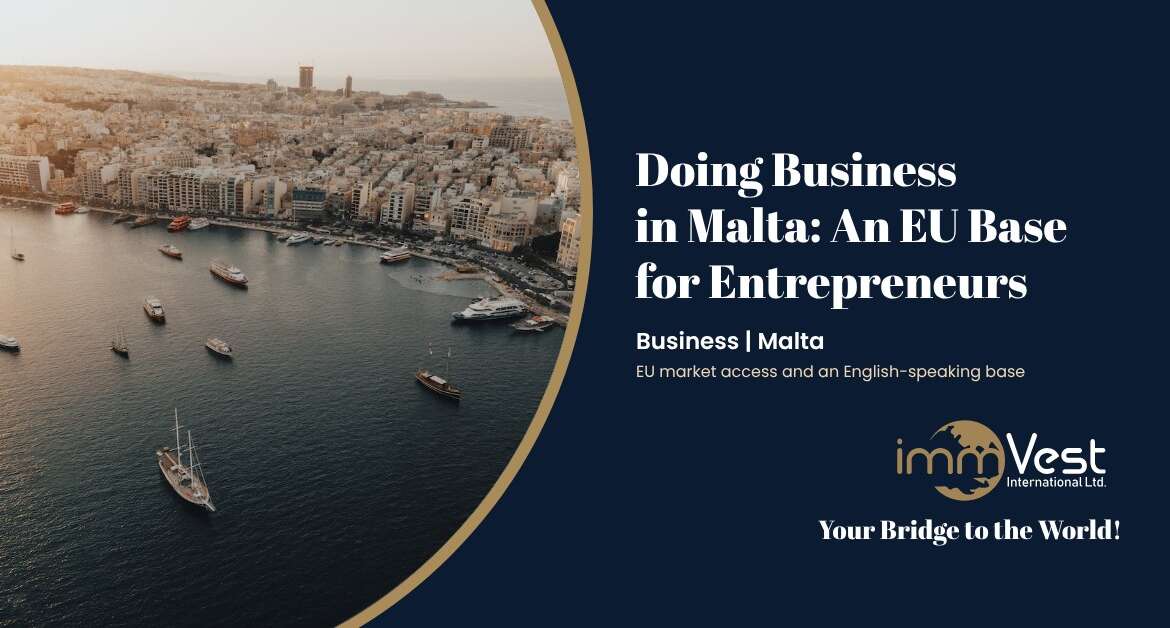
Malta offers entrepreneurs a rare combination: full access to the EU single market from an English-speaking base, a fast-growing economy and a business community small enough that relationships still matter. For investors relocating with their families, it is also a place where work and home life fit together easily.
How strong is Malta’s economy?
Malta has led EU growth tables in recent years. The European Commission puts real GDP growth at 4.0% in 2025 and forecasts 3.7% in 2026, against roughly 1% for the EU as a whole. Employment grew by an estimated 3.9% in 2025, and the economy is driven by strong services exports and tourism.
Which sectors thrive in Malta?
- Financial services and fintech, supported by an EU regulatory framework
- Digital gaming and technology, with a large cluster of international companies
- Maritime, anchored by Europe’s largest ship register
- Aviation, including aircraft registration, leasing and maintenance
- Tourism and hospitality, a long-standing pillar of the economy
- Life sciences, education and real estate, all growing with the population
What practical advantages does Malta offer?
English is an official language, so contracts, banking and public administration are all in English. Malta sits in the Central European time zone, which keeps business hours aligned with the rest of Europe. Its location places companies within a short flight of European, North African and Middle Eastern markets.
How can residency support your business plans?
For non-EU entrepreneurs, the right residence status makes it easier to live in Malta, travel across the Schengen Area and manage a business on the ground. Choosing the route that fits both your family and your commercial plans is the first strategic decision.
Plan your Malta base
immVest International Ltd connects residency planning with practical business support, including legal advice and introductions through our international network. Speak to us at immvest.com, email [email protected] or call +356 79634496.